
Introduction
Calves are one of the most stubborn muscle groups to grow. Many people train them regularly yet see little progress. The problem often isn’t effort it’s technique, consistency, and understanding how the muscles actually work.
The seated calf raise is one of the most effective exercises for building stronger, thicker lower legs. But to get real results, you need more than just going through the motions. Proper form, smart programming, and attention to detail make all the difference.
In this guide, you’ll learn exactly how to master the seated calf raise, avoid common mistakes, and apply proven strategies to maximize calf growth.
BIO
| Label | Information |
|---|---|
| Exercise Name | Seated calf raise |
| Exercise Type | Strength training |
| Main Target | Soleus muscle |
| Secondary Muscles | Gastrocnemius, ankles |
| Equipment Needed | Seated calf raise machine |
| Difficulty Level | Beginner to intermediate |
| Primary Goal | Build calf size and endurance |
| Movement Style | Isolation exercise |
| Best Rep Range | 12–20 reps |
| Recommended Sets | 3–5 sets |
| Key Benefit | Improves lower leg strength |
| Common Mistake | Using short range of motion |
What Is the Seated Calf Raise?
The seated calf raise is a resistance exercise that targets the lower leg muscles, especially the soleus, which lies beneath the larger calf muscle (gastrocnemius).
Unlike standing calf exercises, this movement is performed in a seated position with your knees bent. This positioning shifts the focus away from the gastrocnemius and places more load on the soleus an often overlooked muscle that plays a key role in calf size and endurance.
Muscles Worked in the Seated Calf Raise
- Soleus (primary muscle) – Responsible for endurance and thickness
- Gastrocnemius (secondary) – Assists slightly during movement
- Stabilizers – Ankles and small foot muscles help maintain control
For a deeper understanding of calf muscle anatomy, you can refer to this trusted resource:
Seated vs Standing Calf Raises
- Seated calf raise → Targets the soleus (better for thickness and endurance)
- Standing calf raise → Targets the gastrocnemius (better for peak shape)
Both are important, but if your calves lack density, the seated version is essential.
Benefits of the Seated Calf Raise for Muscle Growth
Adding the seated calf raise to your routine offers several powerful benefits:
- Builds thicker calves by targeting the soleus muscle
- Improves muscular endurance, especially for walking and running
- Enhances ankle stability, reducing injury risk
- Supports athletic performance in sports requiring explosive movement
- Balances lower leg development when combined with standing variations
Many lifters neglect this exercise, which is exactly why including it can give you an advantage.
How to Do the Seated Calf Raise Correctly (Step-by-Step Guide)
Mastering form is the foundation of calf growth. Follow these steps carefully:
Step 1 – Set Up the Machine Properly
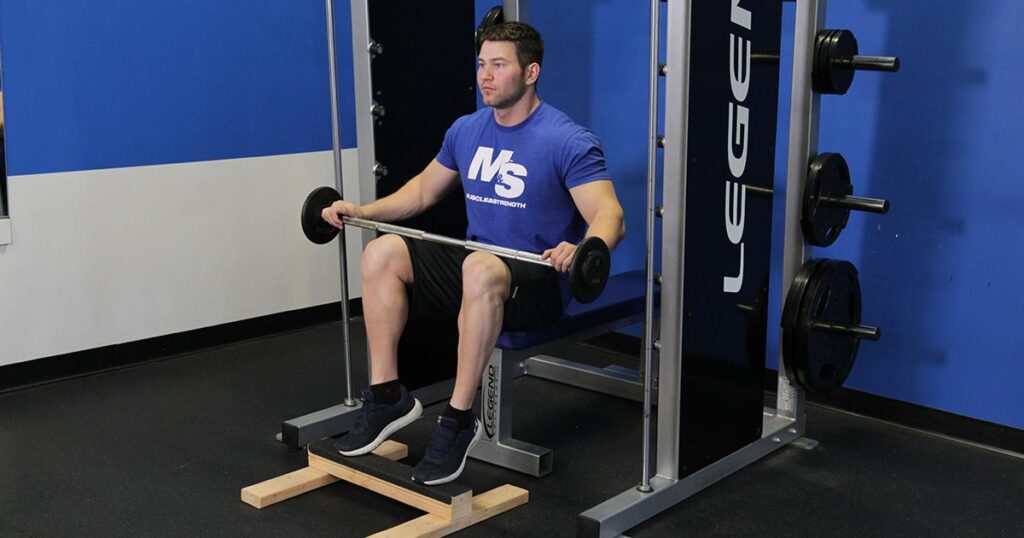
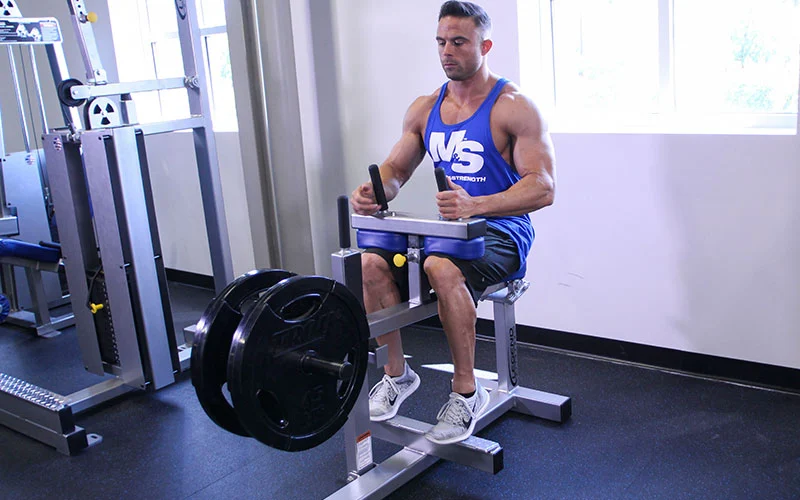
Sit on the machine with your knees positioned under the padded lever. Adjust the height so the pad rests comfortably but securely on your thighs.
Your feet should be placed on the platform with your heels hanging slightly off.
Step 2 – Position Your Feet Correctly
Place the balls of your feet on the edge of the platform. This allows a full range of motion.
Keep your feet:
- Hip-width apart
- Pointed straight ahead (or slightly outward if comfortable)
Step 3 – Perform the Movement
Push through the balls of your feet to raise your heels as high as possible.
Focus on:
- A strong contraction at the top
- Squeezing your calves for 1–2 seconds
Step 4 – Lower the Weight Slowly
Lower your heels in a controlled manner until you feel a deep stretch in your calves.
Do not rush this phase the stretch is crucial for growth.
Step 5 – Breathing Technique
- Exhale as you lift the weight
- Inhale as you lower it
Controlled breathing helps maintain rhythm and focus.
Best Seated Calf Raise Techniques for Maximum Growth
Doing the exercise correctly is just the beginning. These techniques will take your results to the next level.
Time Under Tension
Calves respond well to longer time under tension. Slow down your reps:
- 2 seconds up
- 3 seconds down
This increases muscle activation and growth stimulus.
Full Range of Motion
Never cut your reps short. Go:
- All the way up for a full contraction
- All the way down for a deep stretch
Half reps limit your results.
Progressive Overload
To grow, your muscles need increasing challenge. Gradually:
- Add weight
- Increase reps
- Improve control and form
Consistency here is key.
Ideal Sets and Reps for Calf Growth
Calves often respond better to higher volume:
- 3–5 sets per workout
- 12–20 reps per set
You can also include occasional heavy sets for variety.
Mind-Muscle Connection Tips
Focus on feeling the calf muscles working, not just moving weight.
- Pause at the top
- Visualize the muscle contracting
- Avoid using momentum
Common Seated Calf Raise Mistakes to Avoid
Even small mistakes can hold back your progress.
Using Too Much Weight
Going too heavy reduces your range of motion and control.
Solution: Lower the weight and focus on quality reps.
Short Range of Motion
Partial reps limit muscle activation.
Solution: Stretch fully at the bottom and contract fully at the top.
Bouncing the Weight
Using momentum reduces effectiveness and increases injury risk.
Solution: Slow down and control each rep.
Poor Foot Positioning
Incorrect placement shifts tension away from the calves.
Solution: Keep pressure on the balls of your feet.
How to Fix These Mistakes
- Reduce weight if needed
- Practice slow, controlled reps
- Record your form or train in front of a mirror
- Focus on muscle engagement over ego lifting
Seated Calf Raise Variations to Try
Adding variety can help break plateaus and keep training interesting.
Single-Leg Seated Calf Raise
Train one leg at a time to fix imbalances and improve focus.
Dumbbell Seated Calf Raise
No machine? Place a dumbbell on your knees and perform the same motion.
Resistance Band Variation
Great for home workouts or warm-ups.
When to Use Each Variation
- Beginners: Start with machine or bodyweight
- Intermediate: Add single-leg variations
- Advanced: Mix all variations for maximum stimulus
Sample Seated Calf Raise Workout Plan
Here’s a simple routine to get started:
Beginner Routine
- Seated calf raise: 3 sets × 12–15 reps
- Standing calf raise: 3 sets × 10–12 reps
Intermediate Routine
- Seated calf raise: 4 sets × 15–20 reps
- Single-leg calf raise: 3 sets × 12 reps per leg
Weekly Training Split Example
Train calves 2–3 times per week, ideally at the end of leg workouts.
Example:
- Day 1: Legs + calves
- Day 3: Upper body
- Day 5: Legs + calves
Consistency matters more than complexity.
Tips to Grow Your Calves Faster
If your calves are lagging, these strategies can help:
- Train them more often – Calves recover quickly
- Use slow reps – Focus on control, not speed
- Stretch between sets – Improves flexibility and growth potential
- Don’t skip sessions – Consistency is critical
- Mix rep ranges – Combine heavy and high-rep sets
Remember, calves are used daily, so they require extra effort to grow.
Leg Extension on Machine: Proper Form and Common Mistakes
Frequently Asked Questions (FAQs)
How often should I do seated calf raises?
2–3 times per week is ideal for most people. Calves recover quickly, so higher frequency works well.
Can seated calf raises build bigger calves alone?
They help significantly, but combining them with standing calf raises gives the best overall development.
Why are my calves not growing despite training?
Common reasons include poor form, lack of intensity, and inconsistent training. Focus on full range of motion and progression.
Should I go heavy or light on seated calf raises?
A mix works best. Use moderate to heavy weight with controlled reps and include higher-rep sets.
Are seated calf raises good for beginners?
Yes, they are beginner-friendly and easy to learn, making them a great starting point for calf training.
Conclusion
Mastering the seated calf raise isn’t about lifting the heaviest weight it’s about precision, control, and consistency. By focusing on proper form, full range of motion, and progressive overload, you can unlock real calf growth.
Don’t overlook the importance of the soleus muscle. When trained correctly, it adds thickness and strength that transforms your lower legs.
Stay patient, train smart, and keep improving your technique. Over time, those small adjustments will lead to noticeable results.